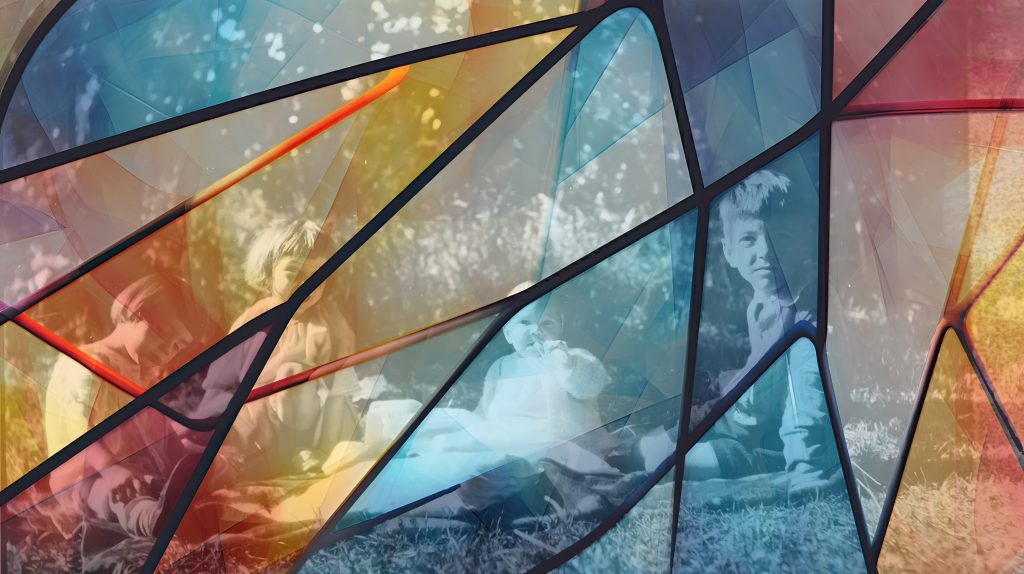
Nostalgia – A Mixed Review
Almost all of us have fond memories of some past experiences that we enjoy revisiting. I say “almost all of us” since there are children who have yet to form those thoughts about past events. But as we grow older we fill cerebral suitcases with travel adventures, lost loves, exquisite meals, time with friends, and so much more. Many of these memories are connected to family and when we gather together, reminiscence may be the topic of the moment.
Reliving these past experiences, for the most part, feels good especially when we share them with those who were a part of any singular experience. We bring out these stories to relate something special or an extraordinary event. I know there are bits and pieces of my past that I have recounted many times because of the unique quality of a specific moment. For instance, when Rachel and I were with good friends in Paris a number of years ago we went to a recommended restaurant for lunch since they were booked for dinners during our stay.
In the tradition of high-end French restaurants, the menus handed to Paul and me were the ones that contained prices. I leaned over to Paul and whispered, “Are these really the prices?” Indeed they were, so I swallowed hard and pretended everything was fine. We all enjoyed our meal and went about the rest of the day. When Rachel asked me what the cost of the meal was, I very reluctantly told her it came out to $1,400 per couple. She gasped! On the other hand, Karen did not know the cost until several years later at which point she was mortified since it was her brother who had recommended the restaurant. I have lost track of how many times I’ve told this story, but needless to say, I’ve gotten my money’s worth out of it just based on the retelling.
This is just one example of how wonderful it is to be able to recount our memories to others and to re-experience the times we have shared with friends and family. We also imbue objects with stories, and our house is filled with gifts we’ve received over the years or things we’ve purchased during trips. Each one has a tale attached to it, reminding us of the joy of a certain moment in the past.
But we also have a propensity to misremember the past. As discussed in previous posts the data we receive is skewed by an imperfect set of senses. We all view the world based on our personal and Subjective nature, molded by previous experiences along with our individual genetic makeup. Two people can be standing side by side watching the same scene unfold and come away with completely different takes on what happened. Over time the gap between these differences in perspective widens as our memories are blended and transformed by similar events or details that may have just been eroded by the years.
Sometimes we believe we are 100% certain of the unfolding of some circumstance in the past only to discover there is hard evidence that refutes those seemingly solid memories. In these cases it is rather disconcerting to come face to face with the fallibility of our thoughts of the past, but it is something we all deal with, especially as we age. Our propensity to feel we have a lock on the truth about our experiences often leads to disputes, especially among family members who are all equally certain of their memories. Most of the time resolution of these differing opinions can only be resolved by accepting the fact that we have made a mistake and that each of us has a unique image of what happened. At that point we can either stick with what we believe to be the truth or accept that we have misremembered, which is not easy to do.
On a broader scale, we tend to suffer from a malaise of misremembering, especially when our memories are corroborated by others. I think of the trend towards believing our nation and culture were once a reflection of utopian society. That we have strayed from that path and must get back there by “Making America Great Again”. That somehow all was good and pure and wonderful when we were growing up, and happiness can only be achieved by rekindling those deceptive memories.
The destructive split in our culture reflects this sense that somehow we have left the best of ourselves in the distant past. Of course this is not the case, but nostalgia and our collective skewed memory of what America was at one time, fuel this split. Many people unconsciously choose to believe in the fantasy of a wonderful past and that we must reclaim it in order to rebuild our society. And when these folks hear this mantra over and over on various media sites, they become convinced their views are accurate and cannot be challenged.
As we know, truth is as slippery as an eel. Our only way forward is to be constantly vigilant of our inclination to misremember our own pasts and retain the understanding that knowledge and mindfulness are our friends. Especially if we are to find a way for our species to survive.
So let’s enjoy our journeys into the past and find that joy in placing a certain spin onto the wonderful moments we have all had, but within the context of both the present and future. I will leave this week’s post with another one of my poems from a number of years back. Thank you for reading this.
Pieces
The neighborhood of my youth
falls away in chunks.
Institutions I thought
as indestructible as steel,
now melt into selective memory,
their passing barely noted
in anachronistic newspapers
soon destined
for their own graveyard.
________________________________
At times I recount tales
of a simpler age,
when the world, easy and warm,
tucked itself into a ball
and rolled across the summer grass.
As I mourn this lost cadence of life
someone asks,“What can one do?”
But no one expects
or even wants an answer.
________________________________
Nostalgia is like a river,
eroding its banks and
constantly recreating itself.
Here my recollections flow,
sustained by static images
trapped in photographs,
appearing as Nirvana,
re-envisioned through
multi-colored glass.
Another provocative, down to earth post. Your story-teller framing of your points make the narrative all the more readable. The approach is a demonstration of the personal, the subjective quality of memory, of truth, and of the consequences of time’s erosive effect.
As to the cost of the meal in Paris, if translated into the value of today’s dollar, what would that meal have cost today? Eye-popping! Still you could view it as a down payment of sorts on the years of good companionship that you and Rachel have enjoyed since. From that angle of view perhaps the meal was a bargain?
As you take pains to point out, memory and the telling of recollections are the acts of subjects. Every event is amenable to more than one interpretation. Over the arc of time, an event can come to mean something entirely different. That is, further events can shed a different light on the past. And we’d not say that either interpretation was necessarily an error, a mis-remembering. Perhaps this is the strength, the power of story-telling, what is necessary for a verbal or cinematic relating of the past to bind us into “a people.”
An overweening focus on empirical fact(s) misses the point. Do we not need to be reminded often that our bias as Americans is for “only facts” because what we want is maximum efficiency? What qualifies as a fact depends upon what a subject wants, the intention of mind. It seems to me that a fact is the child of what the body wants. Facts are derived from the processing of sense experience by the body. Facts are subsidiary to embodied interpretation.
It isn’t a deficit of facts that leaves us feeling alone, lonely, and existentially isolated. The felt vacuum arises from a deficit of opportunity to tell and hear stories of where we come from, and how we got from where we started, to the place we now inhabit and who helped us along the way. To say out loud, describing the hard times, and the stupendous-fabulous times… Face to face, first person story telling establishes community.
Story telling is a subjective framing of experience. I think that each of us is like Homer’s “Odysseus” making our way home, having adventures, trials, shipwrecks, – making stories of our battles. In line with what Joseph Campbell once said, it is up to us to be the hero of our own story.
Keep writing.
Interesting perspective. I tend to think of story-telling as a predetermined set of made up concepts that connect with the reader because a story has a gripping narrative. When a person becomes immersed in The Wizard of Oz, I doubt if they will finish the book and go out seeking a rainbow to find out what’s on the other side. Stories are parables that both entertain and teach. Facts, at least in my opinion, are intended to give us a clearer view of the objective side of life, the side that we can only peek at through our highly subjective perceptions of the world around us.
I’m not sure if most people understand how skewed their memories can be. But when we juxtapose our own personal sense of the past against reality (which we may never know) I think we will always come up short. On the other hand, if we know we cannot grasp the truth of our past experiences and instead use them to tell those stories, knowing full-well that much of what we remember is fantasy, that’s a whole other use of the bits and pieces that float around in our minds. And that’s what creativity is all about.